Advanced / Complex Implants
Told You're 'Not a Candidate'? It's Rarely the Final Answer
22 January 2026
For roughly 35–40% of people who’ve lost their teeth, the implant consultation ends the same way: a scan, a pause, and the words “there isn’t enough bone.” It’s delivered as a verdict (you’re not a candidate for implants) and it’s usually accepted as one. Most people who hear it stop looking. Few are told that the sentence they heard and the sentence that was actually true are not the same.
What’s clinically true is narrower. It’s that there isn’t enough bone for a standard implant placed the standard way. That’s a statement about one method and its minimum requirement. It is not a statement about whether your mouth can be rebuilt.
Two findings that sound identical
A normal implant goes into the jawbone. It needs a minimum height and width of bone to hold. After years without teeth, that bone shrinks, worst of all in the upper back jaw, where the sinus expands down into the space the roots used to fill. Measured against the standard requirement, shrunken bone reads as “not enough,” and the standard method says no.
That “no” is often correct, for the method being measured. But it’s often incomplete as a final answer. “Not a candidate for the standard method” and “not a candidate for implants” are separated by a whole field of jaw surgery, and patients are rarely told that the second sentence isn’t what the scan actually said.
What a denture does to the picture
Told there’s no implant option, most people are sent to the default: a removable full denture. This is where an incomplete answer becomes a worsening one.
A denture doesn’t stop bone loss; it speeds it up. A removable set presses on the ridge from above instead of anchoring into it like a real root, and that pressing wears the bone down further. The loss only goes one way: every year on a loose denture narrows the options that remain and makes any future bone-graft path harder than it would have been at the very first visit.
The options the first visit often skips
In jaw surgery, not enough bone is not the end of the road but a starting point, with well-established fixes that are routine in the field yet missing from most standard implant consultations. Three matter for the shrunken upper jaw.
- The sinus lift. The sinus lining is gently lifted and graft material is added to rebuild bone height in the upper back jaw. It treats the shortage directly, over a staged healing timeline.
- The zygomatic implant. Instead of rebuilding the missing bone, this longer implant anchors into the dense cheekbone (bone that shrinkage doesn’t touch), skipping the worn-down ridge entirely. For severe upper-jaw bone loss, it’s one of the main alternatives to a sinus lift.
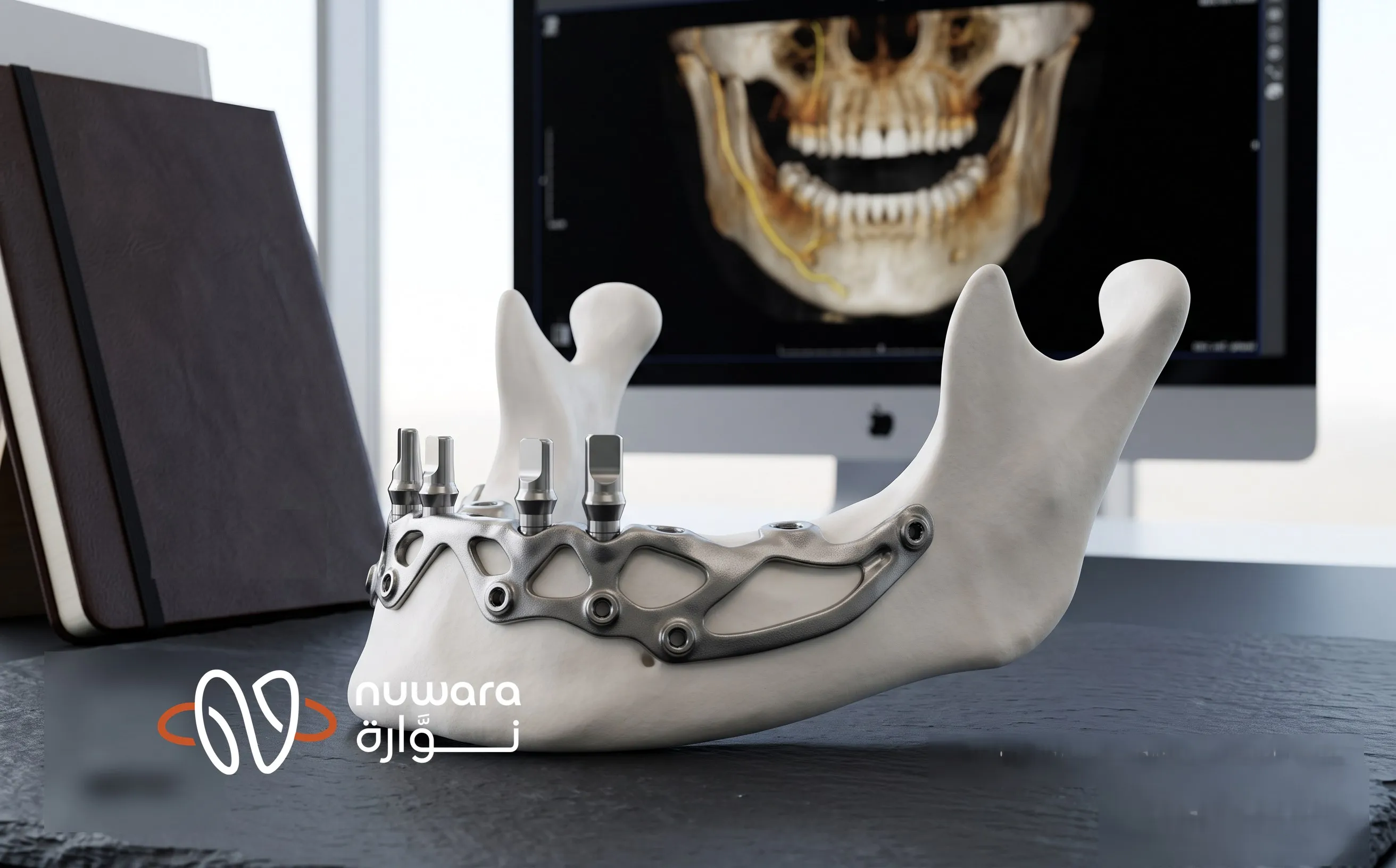
- The custom-made frame. A titanium frame built to fit your exact anatomy from your own 3D scan, anchored to solid bone and resting under the gum. It doesn’t depend on the shrunken ridge at all.
These are not experimental workarounds but documented jaw-surgery methods, aimed at exactly the shortage a standard consultation reads as a dead end.
How our team reads the scan
Every case that comes to Nuwara after a previous rejection gets a 3D bone scan reviewed directly by a senior specialist or university faculty member, not a quick “yes, we can do it.” The scan is read to find where solid bone is available to anchor into, and which of the options your specific anatomy supports.
Where your anatomy allows, the team anchors a custom frame straight to solid bone, which can skip the traditional twelve-month wait for a bone graft to heal. Where a case genuinely does need staged grafting, it’s quoted with the full timeline laid out up front. The plan is matched to your bone. Your bone isn’t forced to fit a marketed plan.
Common questions
I was told I don’t have enough bone for implants. Is that final? Usually it’s a finding about the standard method, not about whether you can be treated at all. Jaw-surgery options (grafting, a cheekbone-anchored implant, or a custom frame) treat that exact shortage. Whether one fits you is decided by reading your 3D scan, not by the standard cut-off alone.
What are the alternatives to a sinus lift? For severe upper-jaw bone loss, the main options anchor outside the missing bone instead of rebuilding it: implants seated in the dense cheekbone, and custom 3D-made titanium frames anchored to solid bone.
How does a bone graft affect cost and timeline? A graft is staged: the graft surgery, a healing wait that can stretch toward twelve months, then the implant. Options that anchor to solid bone can, where anatomy allows, skip the graft stage and get you to fixed teeth much faster.
This article is an educational resource meant to help you make an informed decision. It is not personal medical advice, a diagnosis, or a treatment recommendation. Whether you’re a candidate for any procedure can only be decided by a qualified exam of your own scans. The prevalence and timeline figures are estimates from the clinical literature.
Free resource
Download our free patient safety checklist
Twelve questions to ask any clinic before you commit, each with the answer that keeps you safe.
Expert care abroad, without compromise.
Request your personal consultation →