
Smile Makeover
Veneers vs. Crowns: The One Choice You Can't Undo
15 January 2026
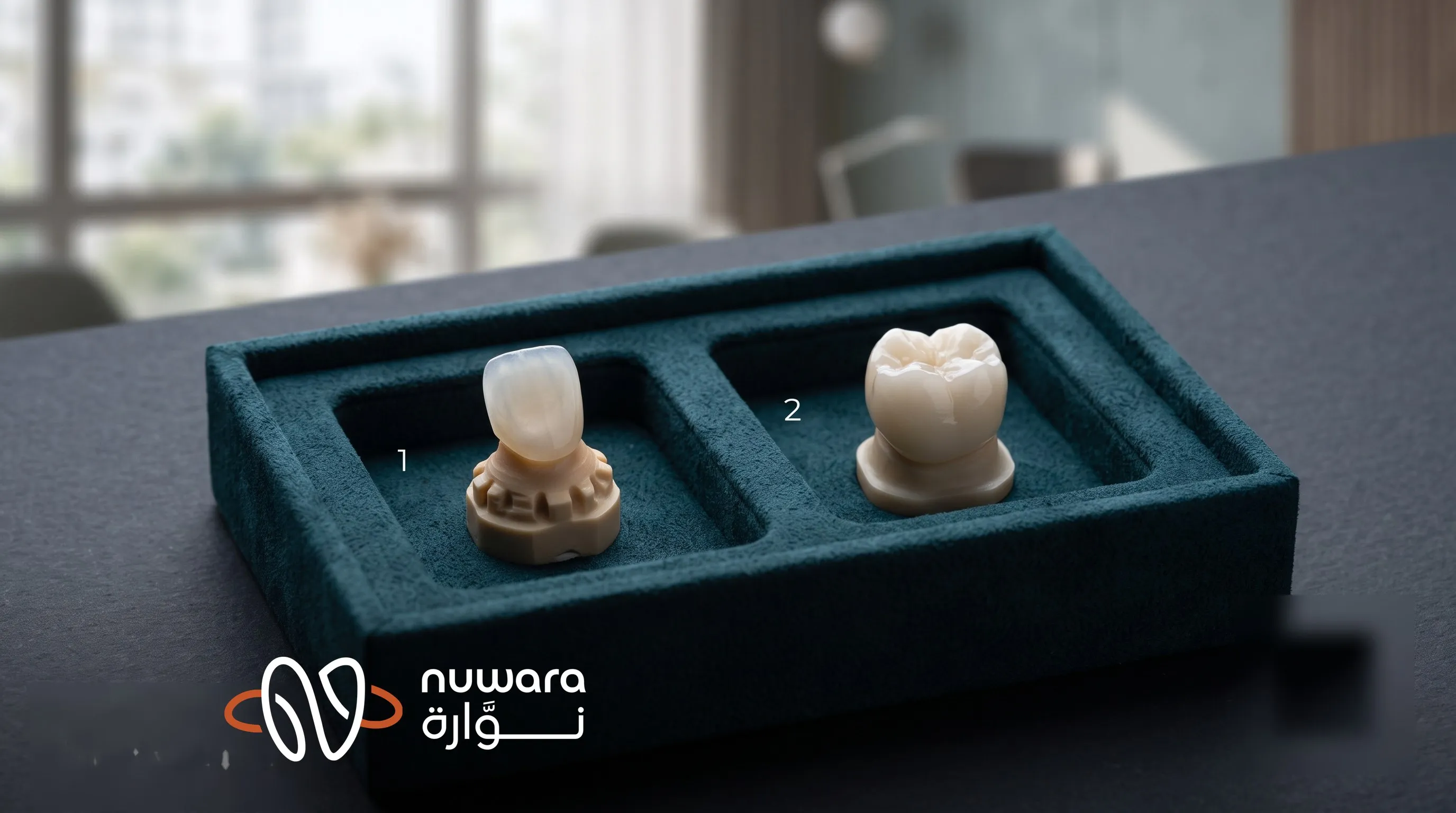
In cosmetic dentistry, the word “veneers” is doing too much work. It’s used for two procedures that are not the same. One resurfaces the front of a tooth. The other removes most of the tooth and puts a cap over what’s left. Both get sold under the same word, at a similar price, to people who came in asking for the first and often get the second.
What matters here is not how the tooth looks, but how much of it is removed, and that is permanent. Once you understand it, you can say no to the wrong one before it happens. If you don’t, you can make a decision you can never undo without even knowing a decision was made.
One word, two very different procedures
Cosmetic tooth treatment comes down to a single question: how much healthy tooth is removed. There are three answers.
At the gentlest end is bonding: a tooth-colored material added to the surface, with little or no tooth removed. In the middle is the porcelain veneer: a thin ceramic layer that needs only the front of the tooth shaved down, usually about 0.3 to 0.5 mm. At the most aggressive end is the crown: a cap that needs the tooth trimmed on every side before it goes on.
These are not three labels for the same treatment. Each one removes a very different amount of tooth, for good.
The difference, in plain numbers
The gap between a veneer and a crown is large, close to ten times, and you can put numbers on it.
A porcelain veneer removes about 0.3–0.5 mm from one side of the tooth. A crown removes tooth from every side, all the way around, adding up to 60–70% of the healthy tooth. One resurfaces the tooth; the other takes most of it away.
And it only goes one way. Enamel doesn’t grow back, and a tooth trimmed for a crown can’t be un-trimmed. Once that’s done, the tooth will need a crown, or a replacement, for the rest of your life.
How long each one lasts
Bonding and porcelain veneers don’t age the same way:
| Restoration | How long it usually lasts | Common problem | What to expect over 15 years |
|---|---|---|---|
| Bonding | ~4–8 years | Staining, wear, chipping | Redo or replace 2–3 times |
| Porcelain (E.max) veneer | ~10–15+ years | Rare; bond or crack | Usually replaced once |
| Zirconia | ~15+ years | Rare when used correctly | Longest-lasting option |
Looked at over fifteen years, the two tell different stories. Bonding is something you keep coming back to fix. A porcelain veneer on the right tooth is something you mostly stop thinking about. Bonding’s lower starting price does not stay the lowest. Over time it is just the first payment of several.
The fix: decide the plan before touching the tooth
The failure here usually comes down to the order of events, not the material or the skill: the tooth gets trimmed before anyone has written down the plan.
A good smile plan says, tooth by tooth and in writing, which teeth get bonding, which get thin porcelain veneers, and which — if any — truly need a full crown because of past decay, a crack, or an old large filling. That plan is made before any tooth is touched, using a digital design that maps the new smile against your own face rather than a one-size-fits-all template.
How our team plans a smile
Every Nuwara smile case starts with a digital smile design and a tooth-by-tooth plan (veneer, bonding, or crown, chosen for each tooth), reviewed by a senior specialist or university faculty member before any tooth is touched. You get the plan before you travel.
We hold materials to a high standard: strong, natural-looking ceramics (E.max and zirconia) with a documented track record of lasting well past five years in over 94% of cases. The tooth is trimmed as little as the result allows, not as much as the procedure assumes.
Common questions
Are veneers and crowns the same thing? No. A porcelain veneer shaves about 0.3–0.5 mm off the front of a tooth; a crown removes 60–70% of the whole tooth, on every side. That removal is permanent and can’t be reversed.
Bonding vs. veneers — which removes less of my tooth? Bonding is the gentlest of the three: material is added with little or no tooth removed. A porcelain veneer removes a thin front layer. A crown removes most of the tooth.
How much do porcelain veneers cost, and how long do they last? Porcelain veneers are best judged over their whole lifespan, not by a single price tag. Good ceramics last a decade or more and hold up well past five years in over 94% of cases, so the cost per year is often lower than cheaper bonding that gets replaced two or three times in the same period.
This article is an educational resource meant to help you make an informed decision. It is not personal medical advice, a diagnosis, or a treatment recommendation. The removal percentages and lifespan figures are general ranges from dental research; only a clinical exam of your specific teeth can tell you what’s right for you.
Free resource
Download our free patient safety checklist
Twelve questions to ask any clinic before you commit, each with the answer that keeps you safe.
Expert care abroad, without compromise.
Request your personal consultation →