The Model
What Really Makes Dental Surgery Abroad Safe
1 January 2026
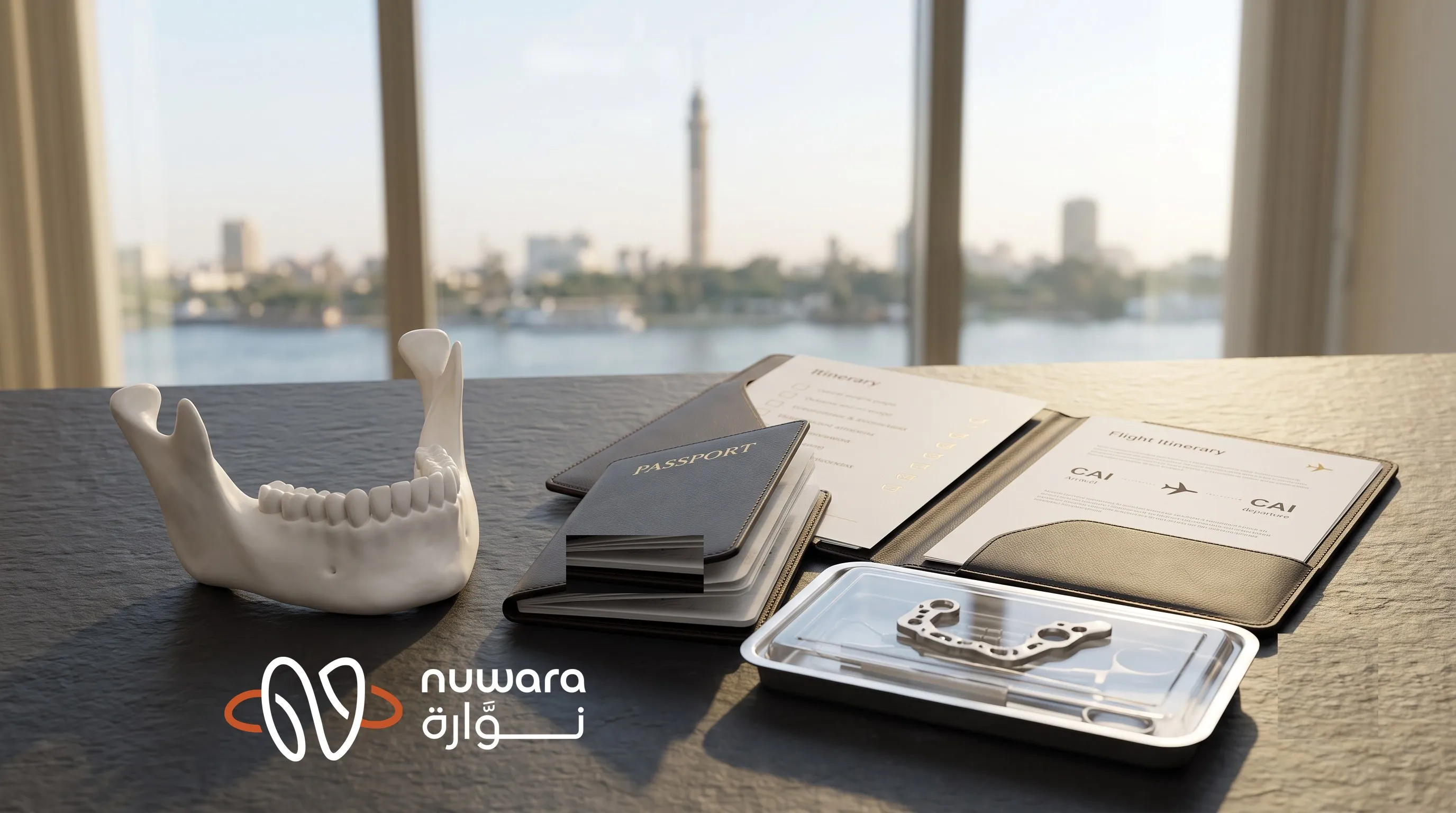
People often assume that whether dental surgery abroad is safe depends on the country. It does not. What makes surgery abroad safe or unsafe is the plan: how the surgery is scheduled, when you’re allowed to fly home, and who is actually responsible for your care. A well-planned trip abroad can be safer than a rushed procedure at home. A badly planned one is risky no matter where you go.
This article walks through the plan. It explains why the fast, “in and out” trips you see advertised carry a real risk, what a safe recovery actually needs, and how your care and your money can be kept separate so neither one pushes the other around.
A three-day trip is a healing schedule set by a plane ticket
Most cheap clinics abroad are built for speed. You arrive, you have surgery, and you’re flown home in about three days. It’s sold as convenient: surgery you collect over a long weekend.
The problem is simple. In that model, your healing isn’t what sets the schedule. Your return flight is. The day you leave is booked before the surgery even happens. So the most important decision after any operation (whether you’re well enough to fly) has already been made by a plane ticket, not by a doctor looking at your mouth. When the trip is built backward from a flight home, your healing has to fit the flight, instead of the flight fitting your healing.
What flying too soon does to a fresh surgical wound
This risk is not hypothetical. A fresh wound reacts to the air pressure in a plane.
After jaw or implant surgery, your body goes through its first big healing stage: swelling and a fragile, freshly closed wound. This stage is usually at its worst 48 to 72 hours after surgery. That’s when the wound is least stable. And in the three-day model, it’s the exact moment you get on a plane.
A plane cabin isn’t kept at ground-level pressure. It’s set to feel like you’re at about 6,000 to 8,000 feet of altitude, where the air pressure is noticeably lower. Under lower pressure, trapped gases in the body expand, and a fresh wound, still swollen and barely closed, gets pushed on at its weakest moment. Flying too soon after surgery is linked to bleeding, more swelling, and the wound reopening.
On top of that, there’s no help at 30,000 feet. If something goes wrong mid-flight, there’s no doctor, no scan, and no way to step in. The fast model flies you early, past the point where the surgeon who operated on you could still check the wound.
Healing is a milestone, not a date on a calendar
The fix is to change what decides your flight home. In a safe plan, you don’t fly on a pre-booked day. You fly when your body reaches a clear milestone: the swelling has calmed down, the wound has closed, and your surgeon has removed the stitches and checked the site in person before giving you the go-ahead to fly.
In this model, clearing you to fly is a medical decision made by your surgeon, not something that came with a plane ticket. That’s only possible if you stay on the ground long enough for the swelling to settle and for that check to happen. That is the whole point of a required healing stay. Far from a holiday, this stay is the time your body needs, protected from a departure date.
The Nuwara setup: two separate jobs, one patient
Nuwara is built around this healing sequence, and around a company structure designed so that money pressure can never rush your care. We work as a care coordinator, not a travel agency and not a clinic. The setup has two parts: how the trip runs, and who’s responsible for what.
The 10-day healing plan
- Day 1: You arrive. We meet you at the airport, help you through arrival, and take you to a five-star hotel by the Nile.
- Day 2: Planning and scan. We take a 3D scan and finalize the plan we prepared before you traveled.
- Day 3: Surgery. Your implants are placed under light (twilight) sedation, with a separate specialist watching over your sedation the whole time.
- Days 4–8: Healing. You rest while the swelling settles. We handle the day-to-day so your recovery isn’t rushed.
- Days 9–10: Stitches out, cleared to fly. Your surgeon checks the healing, removes your stitches personally, and clears you to fly home.
Ten days is not a convenient package length; it is the time the swelling needs to settle and your surgeon needs to check you before you face cabin pressure.
Keeping care and money apart
Nuwara Inc., registered in Delaware, handles the business and travel side: it guarantees your travel arrangements, holds your payment safely until your treatment is done rather than taking money for surgery you haven’t had, and protects your private medical records. This is a money-and-logistics job, not a clinical one.
Your surgery is the responsibility of our clinical team in Cairo. Every surgeon in our network is a board-certified specialist or a university faculty member: senior, accredited, and chosen for your case. They answer to medical standards, not to the travel company. The coordinator can’t overrule a medical decision, and the clinical team isn’t there to sell you a trip.
This separation matters because it removes the conflict at the heart of the tourism model. When one business both sells you the trip and does the surgery, the pressure to fit your healing around the schedule sits inside a single bank account. When the travel and the surgery are run by separate teams, your flight home can’t be moved to suit a booking, because the people who’d benefit from moving it aren’t the people who decide it.
Common questions
Is it safe to get dental implants abroad? Safety comes down to the plan, not the country. The main risk in the cheap model is flying during the first swelling stage, about 48–72 hours after surgery, when a fresh wound meets low cabin pressure with no doctor nearby. A plan that keeps you on the ground until your surgeon confirms you’ve healed and clears you to fly removes that risk, wherever the surgery happens.
Why stay ten days instead of taking a short trip? Because the swelling has to settle and your surgeon has to check the wound and remove the stitches before you face cabin pressure. Ten days is the time that allows for this, not a package length.
Who is responsible if something goes wrong medically? Your care is the responsibility of the clinical team that performs the surgery: board-certified specialists and university faculty. The travel and payment side is handled separately by the Delaware-registered company. Keeping the two apart means medical decisions are never rushed to fit a schedule.
This article is an educational resource meant to help you make an informed decision. It is not personal medical advice, a diagnosis, or a treatment recommendation, and it doesn’t create a doctor–patient relationship. The health figures here are general ranges from medical and aviation sources; only your surgeon can decide when you personally are fit to fly.
Free resource
Download our free patient safety checklist
Twelve questions to ask any clinic before you commit, each with the answer that keeps you safe.
Expert care abroad, without compromise.
Request your personal consultation →